 |
|
Dear Fellows,
As we navigate an era of extraordinary challenge and profound possibility, this edition of the WAAS Newsletter reflects the remarkable breadth and urgency of our collective work. From the halls of the AI Impact Summit in New Delhi, where we explored how artificial intelligence is reshaping the architecture of global power, to our vital conversations on renewable energy and the looming Doomsday Clock, our members continue to place themselves at the very heart of humanity's most pressing challenges.
The discussions captured below remind us why WAAS exists — to bring together the finest minds across disciplines and cultures to illuminate the path forward. Whether examining the roots of our global polycrisis, accelerating the transition to clean energy, or exploring the civilizational transitions unfolding before us, WAAS Fellows are not merely observers of history; they are active shapers of it. Looking ahead, I encourage all members to engage with our upcoming events — each of which offers vital opportunities for collaboration and dialogue.
Sincerely,
Garry Jacobs
President, WAAS
|
|
|
|
An Important Security Notice
It has come to our attention that several members have recently received malicious emails falsely purporting to be from an officer of WAAS. Please remain vigilant. Always verify that any email claiming to be from WAAS originates from the worldacademy.org domain. If you have any doubt whatsoever, please confirm its authenticity by contacting us directly at support@worldacademy.org before responding or clicking any links.
|
|
|
|
Event Reportback
|
|
|
|
|
|
AI Impact Summit 2026 India
|
 |
|
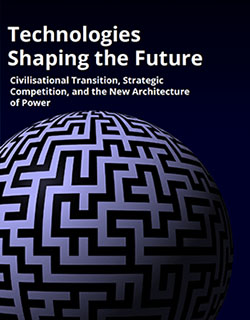
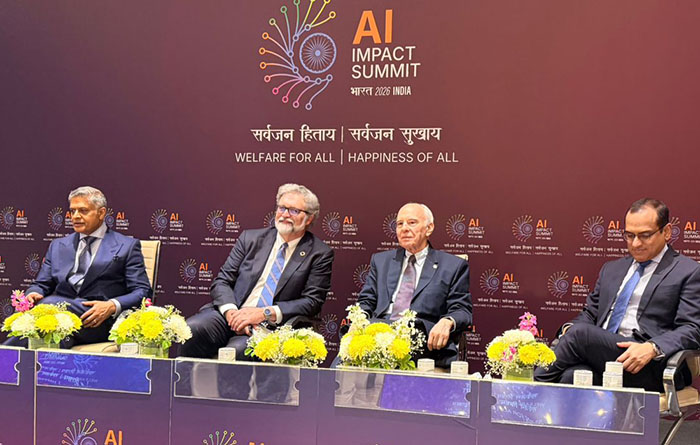
The AI Impact Summit 2026, hosted by IndiaAI Mission, was held from 16-20 February in New Delhi. This major international conference was organized by the Government of India along with leading global AI experts. Ketan Patel, Chair of Force for Good and WAAS Executive Director, led a high-impact session titled “Great Powers in the Age of AI and Cognitive Systems.” The event also marked the launch of Force for Good’s report: “Technologies Shaping the Future: Civilizational Transition, Strategic Competition, and the New Architecture of Power.” The panel explored the role of AI and cognitive systems in shaping a secure and sustainable future, the transition from the Industrial Age to the Information Age and its governance implications. Patel was joined by WAAS President, Garry Jacobs, WAAS Fellow Shaurya Doval, and Glenn Gaffney.
"Technology has never been the real problem," said Jacobs. "From agriculture to money to artificial intelligence, progress has always depended on one thing — how we choose to use it."
|
|
|
| |
|
|
|
Is Extractivism a Prime Cause of the Polycrisis?
|
 |
|
A Discussion of the Political Economy of Anthropogenic Existential Risks
On February 17, 2026, a webinar co-hosted by the WAAS Existential Threats and Risks group (EXTRA) and The Global Extractivisms and Alternatives Initiative at the University of Helsinki (EXALT) explored a range of existential risks that are increasingly converging, and threatening the world. The complexity of this emerging polycrisis demands that numerous risks be considered simultaneously. This may seem like an impossible task for policymakers on all levels, but the challenge is greatly reduced if we can instead identify and address the underlying causes. In this webinar, moderated by EXTRA Chair and WAAS Trustee Thomas Reuter, that included WAAS Fellows Hamed Hosseini and Barry Gills, the panel focused on one of these underlying causes — Extractivism.
|
|
|
| Watch Here |
|
|
|
The Risk Landscape Chart
EXTRA has released a Risk Landscape Chart (RLC) listing 37 reports and 11 books that address multiple risks, threats, and challenges contributing to what is now often described as a global polycrisis. VIEW THE LIST
|
|
|
|
WAAS Talks on Science for Human Security: Renewable Energy
|
 |
|
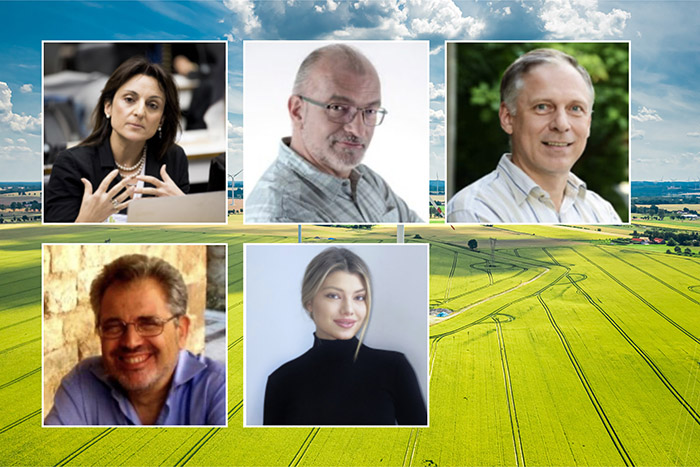
With the Doomsday Clock now at 85 seconds to midnight — the closest to catastrophe in recorded history — the latest WAAS Talks on Science for Human Security: Renewable Energy on 23 February, 2026, addressed one of the most important topics of science for sustainable development, namely the science of clean renewable energy technologies. The webinar brought together leading scientists, economists, and youth leaders to address one of civilization's most urgent challenges: accelerating the transition to renewable energy.
Panelists made a compelling case that energy is not merely an environmental issue but a fundamental driver of war, economic instability, and global security. Wind and solar are now the world's cheapest electricity sources, and experts project that a full energy transition in developed nations is achievable within 25 years — with transformative effects on geopolitical conflict and fossil-fuel-funded aggression. The panel was chaired by Aleksander Zidanšek, WAAS Vice President (Science & Technology), with WAAS Trustee Phoebe Koundouri, WAAS Fellows, Neven Duić and Ugo Bardi, and WAAS Associate Fellow, Dina Dragija.
The conversation emphasized that solutions exist. What's needed is cross-sector collaboration, public engagement, open science, and accountable governance. From integrated mathematical modeling to youth-led innovation forums, the path forward is clear — what remains is the collective will to make it happen.
|
|
|
| Watch Here |
|
|
|
|
|
Upcoming Events
|
|
|
|
1 MARCH 2026 / ONLINE
The Millennium Project, in collaboration with WAAS and other international organizations, will host World Futures Day on 1 March, 2026. Under the leadership of Jerome Glenn, WAAS Fellow and CEO & Co-Founder of The Millennium Project, the event will feature discussions with world-leading futurists and thought leaders about the potential trajectories of the present developments, speculations about future innovations in all imaginable domains, and their impacts on alternative futures. Chatham House Rule will apply, ensuring non-attribution.
15 MARCH 2026 / BAKU
XIII Global Baku Forum: WAAS Side Event
A follow-up event to the 2025 discussion on Global Turbulence at the XII Baku Forum, this side event will focus on the development of solutions under three interdependent themes: Peace, Prosperity, Freedom and Human Security, and four essential issues. READ MORE
13-18 MARCH 2026 / ONLINE / MARIBOR
Answering Current Challenges in Society, Health and Technology. The 14th Annual Conference of Europe’s Sciences and Arts Leaders and Scholars in Maribor, Slovenia, forms part of the WAAS Global Peace Offensive project, chaired by Donato Kiniger-Passigli, WAAS Vice President (Social Sciences and Humanities). Last year's conference remains one of the year’s most pivotal international scholarly events in Europe. It welcomed over 250 authors from more than 30 countries, including distinguished academics from Oxford, Bologna, KU Leuven, and Edinburgh. Kiniger-Passigli will be joined by Klaus Mainzer, President of the European Academy of Sciences and Arts, an institutional partner in the Global Peace Offensive initiative, along with WAAS, Alma Mater Europaea and the Club of Rome.
|
|
|
|
Partner News
|
|
|
|
|
|
|
|
Technologies Shaping the Future
WAAS partner Force for Good, in conjunction with The Institute for Strategic Intelligence and Intervention, has released Technologies Shaping the Future. The report argues that we are entering an era-defining technological transition that could drive a US$350 trillion global wealth shift by 2050, while warning of a potential US$13 trillion market correction if current AI models continue on an unsustainable energy and resource trajectory. It identifies six systemic technologies - AI, quantum computing, fusion energy, nanotechnology, gene editing and extended reality - with the power to shape the future.
|
|
|
| Read The Report |
|
|
|
|
|
SDGs in Universities
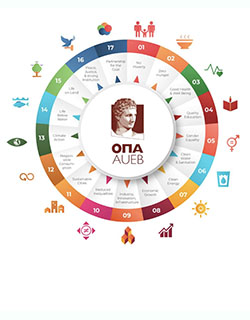
“SDGs in Universities: Athens University of Economics and Business,” was produced by WAAS research partner AE4RIA - Alliance of Excellence for Research and Innovation on Αephoria in collaboration with Resees, Research Laboratory AUEB and SDSN Europe. This comprehensive, data-driven assessment explores how Athens University of Economics and Business (AUEB) aligns its research, education, governance, and external engagement with the UN 2030 Agenda and the 17 SDGs.
|
|
|
| |
|
|
|
|
|
WAAS DIGEST
|
|
|
|
Books/Articles/Videos by Members
|
|
|
-
— Goran Bandov et al.
-
— Ugo Bardi
-
— Mutaz M. Qafisheh
-
— Adrian Bejan
|
|
|
|
Art by Members
|
|
|
-
— Robert Ballagh
-
— Vijali Hamilton
-
— Denys Zacharopoulos
|
|
|
|
Recent Member Activities
|
|
|
|
FEBRUARY 2026, KIGALI
Amanda Ellis led a panel discussion in Kigali, Rwanda at the Global Learning Conference 2026 on mobilizing human and financial capital for education. Education systems cannot transform without sustained investment in both people and resources. With global education requiring an additional $100 billion annually by 2030 and an estimated education finance gap of $77 billion per year in Africa, traditional funding approaches are no longer sufficient.
FEBRUARY 2026, BAHRAIN
Goran Bandov was presented this prestigious prize by the Canadian Voice of Women for Peace and has been invited by the book co-author Dr. Susan Hartley — a peacebuilding activist and Rotary Peace Fellow — to be one of 100 Global Peace Advocates. He dedicated his essay in the book to peace education, its importance and challenges.
FEBRUARY 2026, ONLINE
This webinar, hosted by the Interfaith 'Ohana of Hawaii during World Interfaith Harmony Week, brought together speakers from diverse backgrounds to discuss the Golden Rule — "treat others as you wish to be treated" — as a universal ethical principle found across world religions. Panelists explored its roots in Islam, its relevance to nuclear disarmament, environmental stewardship, and human rights, and emphasized applying it practically in daily life to foster peace, compassion, and global harmony.
NOVEMBER 2025, GLOBAL
Werlen joins 70 newly elected scholars, who are internationally influential and professionally authoritative — from renowned universities and research institutions across over 20 countries. Advised by nine Nobel Prize laureates, the IETI is dedicated to advancing collaborative and interdisciplinary research in science, engineering, and technology, while fostering innovations that address pressing societal challenges.
|
|
|
|
Add Your Perspective
|
|
|
|
Your Thoughts on WAAS Program Topics
We invite WAAS Fellows to share their thoughts and perspectives on the WAAS Program topics and how these programs can respond to the major challenges facing the world today. Selected responses will be shared on WAAS social media platforms to promote dialogue, visibility, and collective thinking, with full attribution to the author.
|
|
|
|
Call For Articles — Cadmus Journal
Cadmus invites the submission of articles for forthcoming issues of the journal. Contributions addressing global governance, human development, education, sustainability, economic and social transformation, and other themes aligned with the mission of the Academy are welcome. Submissions that offer transdisciplinary perspectives, and clear relevance to contemporary global issues will be given priority. Author guidelines and submission procedures are available on the We welcome your contributions to advance the ongoing dialogue on shaping a more inclusive and sustainable future.
|
|
|
|
From The Archives
|
 |
|
Poets, Painters and Physicists: Rediscovering the ±»ÎÑӰÊӸ£Àû’s Creative Legacy
The recently launched WAAS project, the Planetary Arts Movement: X-Art, has begun, in one sense, with a blank canvas. But in another, it's a return — to a radical founding idea from 66 years ago that placed artists and humanists shoulder to shoulder with scientists and academics in shaping civilization. After more than a year of research in the WAAS archives some remarkable stories have surfaced. READ MORE
|
|
|
|
|
|
|
|
|
|
|
|
The ±»ÎÑӰÊӸ£Àû of Art and Science (WAAS)
Solano Avenue, Napa, CA 94558, USA
This email newsletter was sent to you by the ±»ÎÑӰÊӸ£Àû of Art and Science (WAAS) because you are a Fellow of the Academy or form part of our extended network of partners and supporters. Your email will not be used for any other purpose or shared with third parties.
|
|
|
|
|