

Online | March 23, 2026 | 13:00 CET
Are we witnessing a descent into prolonged geopolitical disorder or the birth pangs of aÌý‘New Planetary Order’?
Ìý
A WEBINAR HOSTED BY EXTRA (Existential Threats and Risks to All), an initiative of the ±»ÎÑӰÊӸ£Àû of Arts and Science.
The latest 2026 WEF Global Risk Perception Survey reveals widespread concern over the escalating risk of geoeconomic confrontation, state-based armed conflict, political polarization, and misinformation. At the forum itself, Canadian Prime Minister Mark Carney urged leaders to acknowledge and respond to the risk of a collapse of the rules-based international order, growing contempt for international law, diplomacy, environmental responsibility, respect for human rights, arms control, and stabilizing multilateral institutions in favour of unilateralism, illegality,Ìý corruption, and economic extortion. The use of military force without reference to international legal obligations by two permanent members of the UN Security Council, the US and Russia, is accelerating global instability. This trend is amplified by arms racing, even in space, and new technologies, such as AI.
There are many important questions, such as: Looking at the case of Venezuela, Greenland, and Iran, can such tactics preserve US hegemony, or are they evidence of overreach, signalling the end of a brief unipolar moment? What is the consequence of the continued war in Ukraine? Even if the US or Russia prevail in their engagements, what does such naked power politics imply for global risk governance? How may the global security landscape and geoeconomics be reorganised? Are there deeper issues behind the veneer of politics? Will cooperation on existential risks to humanity still be possible in the context of a new multipolar world (dis-)order? Can we manage such a major transition without endangering people and the planet? If so, where can we look for the beginnings of a new, positive framework for cooperation?
A group of speakers from diverse perspectives will share their knowledge and foresight in this webinar to shed fresh light on these questions and consider what may lie ahead.
Hosted by the EXTRA Team

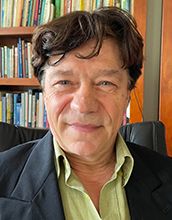
Ana Maria Paraschiv
Communication and Networking, EXTRA
Thomas Reuter
Chair, EXTRA
Speakers
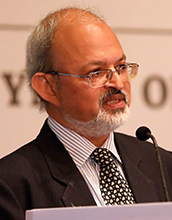
Sunjoy has deep knowledge of the risks and geopolitical upheaval associated with the momentous transition from fossil fuels to renewables currently underway. His perspective is particularly interesting given that India is still energy-dependent on petro-states such as the US and Russia, yet is also investing heavily in renewables, while neighbouring China leads as the world’s first electro-state. Other developing countries face similar choices around energy, but also trade. Sunjoy will reflect on the extent to which energy is a driver in the current geopolitical competition.Ìý
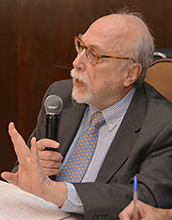
Renato is a highly prominent expert in geopolitics, geoeconomics, and international trade. He will reflect on the current geopolitical turmoil from his very interesting Brazilian and BRICS perspective. This perspective sheds light on recent questioning of the predominance and stability of the US dollar and US-led financial system, as well as risks for South America arising from the new ‘Donroe Doctrine’.

Velina is very knowledgeable on geopolitical trends. In recent talks she discussed the significance of the China-Russia or ‘dragon-bear’ alliance in Eurasia. She is also knowledgeable on the history and impact of the Ukraine conflict, and the wider struggle between NATO and Russia, the US and China, which play out in multiple geopolitical theatres. Velina will reflect on the recent destabilisation of the Atlantic alliance, and what shifts and new risks may emerge from all these monumental changes.
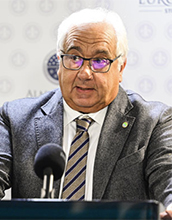
Donato Kiniger-Passigli
Donato is Vice-President of the ±»ÎÑӰÊӸ£Àû of Arts and Science, and head of the academy’s Global Peace Offensive. He has authored several recent papers on challenges and solutions for global security. Positioned at the UN Office in Geneva, he will speak to us about the current instability from a multilateral perspective, consider what role the UN may or may not play in an emerging multipolar order, and examine the prospects for peace, the rule of law, and effective global risk governance.
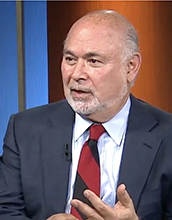
Jonathan is President of the Global Security Institute and brings a strong civil society perspective to the discussion. He will reflect on the consequences of the current geopolitical instability for human security, in terms of the associated risk for nuclear and other major confrontation. Drawing on his perspective as a leader in the legal profession in the US., which is at the forefront of the struggle to protect democracy, he can also comment on how global instability connects to his country’s internal struggles.


